What "Water and Power Available" Really Costs You on Land Near Benson
October 1, 2026
October 1, 2026
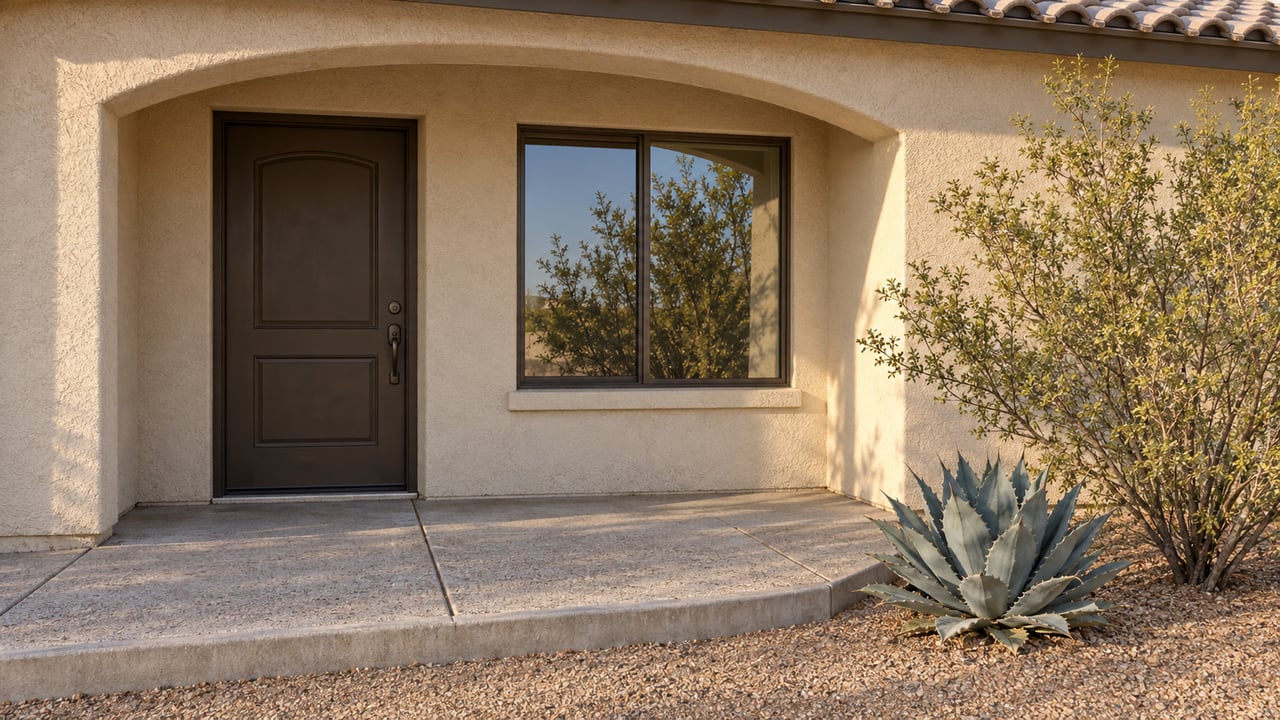
Scroll through land listings around Benson right now and the same three words show up over and over: water and power available. The phrase can describe different stages of utility access; it does not necessarily mean service is connected. For example, a power line may run along the road, while water may come from a shared well. A parcel may still need utility connections planned, permitted, and paid for before construction.
That gap between "available" and "installed" is the part of a Benson land purchase that catches people off guard, and it's worth understanding before you write an offer.
Look closely at almost any acreage listing outside Benson's city limits and you'll see the same pattern repeated with small variations. A parcel description might read "electric to lot line, deep well with strong capacity on site, install septic." Another reads "underground electric to each lot." A third simply says "buyer would need to install a septic".
The utility questions fall into three separate categories:
Power is usually the easiest piece. If a line runs along the road or an electric cooperative like Sulfur Springs Valley Electric already serves the area, a hookup is a service call and a fee, not a construction project.
Water is where the variation is widest. Some lots have a private well already drilled. Others have a shared well. A few properties advertise an artesian well on site, which is a different animal entirely and worth its own conversation with a hydrologist before you count on it. None of these are wrong or risky by default. They're just not interchangeable, and a listing that says "water available" doesn't tell you which one you're getting.
Septic is the piece that comes with a government deadline attached, and it's the one most buyers don't see coming.
Arizona requires a state-mandated Notice of Transfer any time ownership of a property with an onsite wastewater system, meaning most septic systems, changes hands. In Cochise County, that notice and its accompanying inspection paperwork go to the Cochise County Health and Social Services Environmental Health Division at 126 West 5th Street in Benson, and the buyer is the one who has to file it. The window is 15 calendar days from the date the property transfers. The fee, as of the current form, is $70 per parcel.
If a parcel has more than one septic system on it, you still only file one Notice of Transfer, but you need a separate Report of Inspection for each active system. Split parcels each need their own filing and their own fee. None of this replaces a normal home inspection, and a passing transfer inspection isn't the same thing as county approval of a new system. As the ParcelRecordsUSA Cochise County septic guide puts it, "the transfer inspection is not the same as a county approval of a new system."
For a buyer purchasing a finished house with an existing system in good working order, this is a manageable errand. For a buyer purchasing raw or partially improved land with no system yet, the sequence looks different: soil and site evaluation first, while the home, well, driveway, and utilities can still be moved on paper, then permitting, then installation, and only then a functioning system that can eventually be transferred again down the road. Skipping the order, or assuming acreage automatically means enough room for a septic field, is the mistake that stalls projects. Easements, slope, rock, wash boundaries, and the required reserve disposal area can eat up more of a five-acre lot than it looks like on a map.
"Rural" land near Benson isn't one product. Three actual subdivisions in the area illustrate how differently these deals can be structured before a buyer even gets to the septic question.
| Subdivision | Utility setup | Zoning / restrictions | What it signals |
|---|---|---|---|
| Cottonwood Highlands | Finished, custom home lots with utilities already resolved | Finished subdivision | Historic per-lot sales averaged over $100,000, reflecting the premium for lots that already cleared the utility and permitting work |
| Rio Vista | Shared well with a storage tank, pressure tank, and distribution lines already built to each lot; underground electric to each lot | Buyer still needs septic, but water and power are functionally done, which is a meaningfully lighter lift than raw acreage | |
| Coyote Hill | Site-built homes | Lower ongoing cost and more flexibility, but also less of the utility groundwork done for you compared to a finished subdivision |
None of these is the "right" answer. A buyer who wants to build custom and doesn't mind managing the well and septic sequence themselves might prefer Coyote Hill. A buyer who wants to close and start construction without solving utility questions from scratch is paying for exactly that convenience in a subdivision like Rio Vista or Cottonwood Highlands. The mistake is assuming any Benson-area lot behaves like the others because they're all within a short drive of the same San Pedro Valley views.
If you've already looked at Benson's numbers on a portal, the headline as of August 2026 is a median list price of $339,000. Sit with the two numbers next to it and the headline gets more interesting. The typical listing that month spent a median of 133 days on the market, up from 103 days the year before, and yet 125 homes sold in August 2026, up from 94 the year before. Prices held roughly flat, listings took longer to move, and more of them sold anyway.
That combination usually points to one thing: more inventory reached the market than the year before, not that buyers slowed down. A market can absorb more listings and still take longer per sale, especially when a share of that inventory is acreage and manufactured-home lots that come with their own well, septic, and zoning homework attached, the kind of homework that adds real days to a closing timeline no matter how motivated the buyer is.
More importantly for a land buyer, that median describes finished homes, not vacant acreage. A finished house's time on market is set by buyer demand and listing price. A land purchase's timeline is set by something else entirely: how long the well share paperwork takes to transfer, how long the septic site evaluation and permit process runs, and whether the Notice of Transfer deadline is even relevant yet, since it only kicks in once you actually own a property with a system already installed. If you're buying raw land with no septic yet, that 15-day clock hasn't started. It starts later only if ownership transfers while the property has a system installed. The home price median is close to irrelevant to how fast your land deal will actually move.
A short list to work through before you get attached to a specific parcel:
Does every lot near Benson need its own well? No. Some lots have a private well, some hold a fractional share in a shared well with its own distribution system, and some sit inside subdivisions where water is already resolved. The listing language usually tells you which situation you're in, but it's worth confirming with the recorded agreement rather than the marketing description.
Who files the septic Notice of Transfer, the buyer or the seller? The buyer files it, within 15 calendar days of the transfer, with Cochise County Health and Social Services Environmental Health Division in Benson. The fee is $70 per parcel as of the current form.
Is a passing septic transfer inspection the same as county approval of the system? No. A transfer inspection confirms the existing system's condition at the time of sale. It doesn't substitute for county approval of a new installation or for your own independent inspection.
Buying land or a manufactured-home lot near Benson isn't harder than buying a finished house, it's just sequenced differently, and the sequence matters more than the price per acre. If you're weighing a parcel and want a second set of eyes on the well, septic, and zoning questions before you write an offer, Emma-Lee Samaniego is glad to walk through it with you.
This article is general information, not legal, tax or financial advice. Consult a qualified professional about your situation.
Stay up to date on the latest real estate trends.

Every client deserves personalized attention and reliable guidance. Work with a real estate professional dedicated to helping you achieve your goals. Whether you're exploring the community or planning your next move, I am here to help you learn more about everything Nevada and Arizona has to offer.