Boulder City Historic District Certificate of Appropriateness: Buyer Risks
September 17, 2026
September 17, 2026
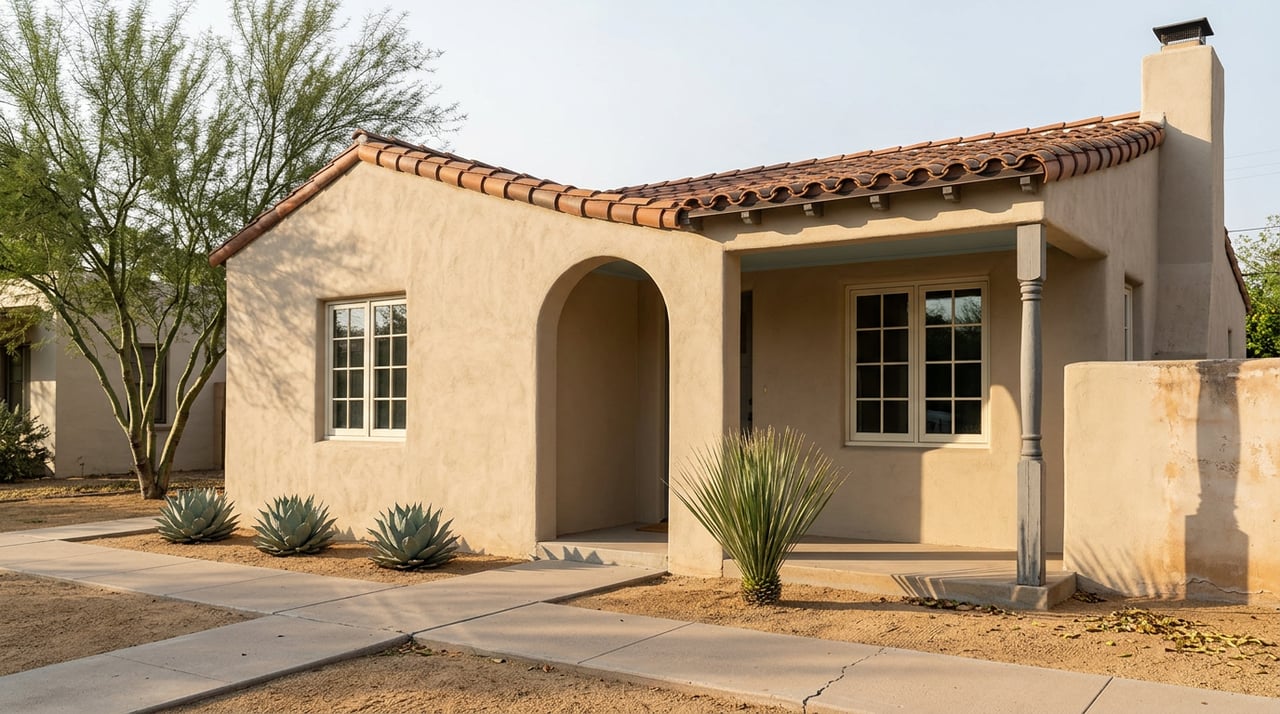
A buyer walks through a 1930s cottage in Boulder City's historic core, admiring the original wood-frame windows, already picturing bigger panes and better energy efficiency once they close. A home inspector can flag the roof, the foundation, the wiring. Buyers may also need to check whether the City of Boulder City requires approval for proposed window changes and whether approval exists for prior visible work.
That's the part of a Boulder City historic-district purchase that doesn't show up on a home inspection checklist. It's a compliance question.
Boulder City's historic district was listed on the National Register of Historic Places in 1983, covering more than 541 homes and buildings in the original townsite. Properties inside that boundary operate under the city's Historic Preservation Ordinance, and the rule that matters most to a buyer or seller is straightforward once someone explains it: any exterior change that requires a building permit and is visible from a public street needs a Certificate of Appropriateness, sometimes shortened to a COA, before work starts. Ordinary maintenance is exempt. A re-roof, an addition, a new fence, or a changed window opening is not.
Deputy City Manager Michael Mays put it plainly when the city announced a public workshop on the subject earlier this year:
"Exterior changes to properties within the historic district that are visible to a public street and require a building permit must obtain a Certificate of Appropriateness."
Windows and doors carry a narrower exception worth knowing before you budget a renovation. Replacing a window or door does not require a COA as long as the size and configuration stay the same. Swap a small original window for a larger modern one, and you've crossed into COA territory even if the rest of the project is routine.
Here's the version a buyer's agent should actually be checking before writing an offer:
| Typically requires a COA | Typically does not require a COA |
|---|---|
| Re-roofing visible from the street | Repainting in the same color (ordinary maintenance) |
| Additions or new structures | Door or window replacement, same size and configuration |
| New fencing or wall visible from the street | Interior renovations not visible from a public street |
| Enlarging or changing window and door openings | Routine repair that doesn't change appearance |
Boulder City spent 2024 building an Interactive Map Viewer so an owner could type in an address and see the property's construction year, architectural style, contributing status, and applicable design guidelines. The map also gives buyers touring the district a way to check those details.
The city followed that up on January 20, 2026, with a "Historic Preservation Pop-Up: Ask the Experts" workshop, an open-house format where residents, contractors, and owners could sit down one-on-one with city staff and Broadbent & Associates, the firm the city retains as its historic preservation consultant. The event used informal stations rather than a lecture.
The map and workshop give buyers a starting point for due diligence. Buyers can ask whether a seller re-roofed, added a carport, or swapped out original windows in the last decade and whether any applicable approvals were obtained.
Boulder City has operated under a growth control ordinance since 1979 that caps new residential building permits at roughly 120 per year, a fraction of the volume a Henderson or Summerlin subdivision issues in the same period. The resale stock inside and around the historic district is part of a market with limited annual new construction.
That scarcity shows up in the transaction data too, though the numbers move around more than they would in a higher-volume market. Over the three months ending May 2026, Boulder City's median sale price sat at $499,000, down 1.4 percent year over year, with homes averaging 76 days on market compared to 47 days the year before. By September 2026, the median days on market had tightened to 54, an 11 percent improvement from September 2025. Sixty-five homes sold in Boulder City in May 2026, a small enough number that a handful of historic-district closings with unresolved COA issues can visibly move the average time to close for the whole market that month.
For buyers considering a historic-district home, checking visible exterior work and applicable approvals is one part of due diligence.
Checking COA status before you're under contract can help you plan due diligence and ask questions early. Waiting until after your inspection period closes can delay your plans.
If you did visible exterior work on a historic-district property without a COA, the cleanest path is resolving it before you list, not during someone else's inspection period. The city's Community Development staff and the Historic Preservation Commission exist to help owners navigate exactly this, and a workshop like the one held in January suggests the city would rather help you get compliant than discover the gap later. A resolved compliance history is also a selling point in a market this tight. Buyers who've done their homework will notice.
Does a Certificate of Appropriateness apply to every home in Boulder City? No. It applies specifically to properties within the boundaries of the Boulder City Historic District, the area listed on the National Register of Historic Places in 1983. A property outside that boundary follows standard Clark County and city building permit rules without the added historic review layer.
What if I just want to repaint my house the same color? Ordinary maintenance, including repainting in the existing color, does not require a Certificate of Appropriateness. The requirement is tied to changes that alter the property's appearance or require a building permit, not to upkeep.
How long does the COA review process usually take? The city's own process varies by the scope of the project, and staff are available to meet with owners before a design is finalized to help avoid delays. Anyone with a timeline-sensitive purchase or renovation should contact Community Development directly rather than assume a standard turnaround.
For buyers and sellers in Boulder City's historic district, the approval process is an important part of planning a purchase or listing. If you're weighing a purchase in the district, or thinking about listing a home that's had some work done over the years, Emma Lee Samaniego can help you sort out what's actually on file as part of your planning. Let's Connect.
This article is general information, not legal, tax or financial advice. Consult a qualified professional about your situation.
Stay up to date on the latest real estate trends.

Every client deserves personalized attention and reliable guidance. Work with a real estate professional dedicated to helping you achieve your goals. Whether you're exploring the community or planning your next move, I am here to help you learn more about everything Nevada and Arizona has to offer.